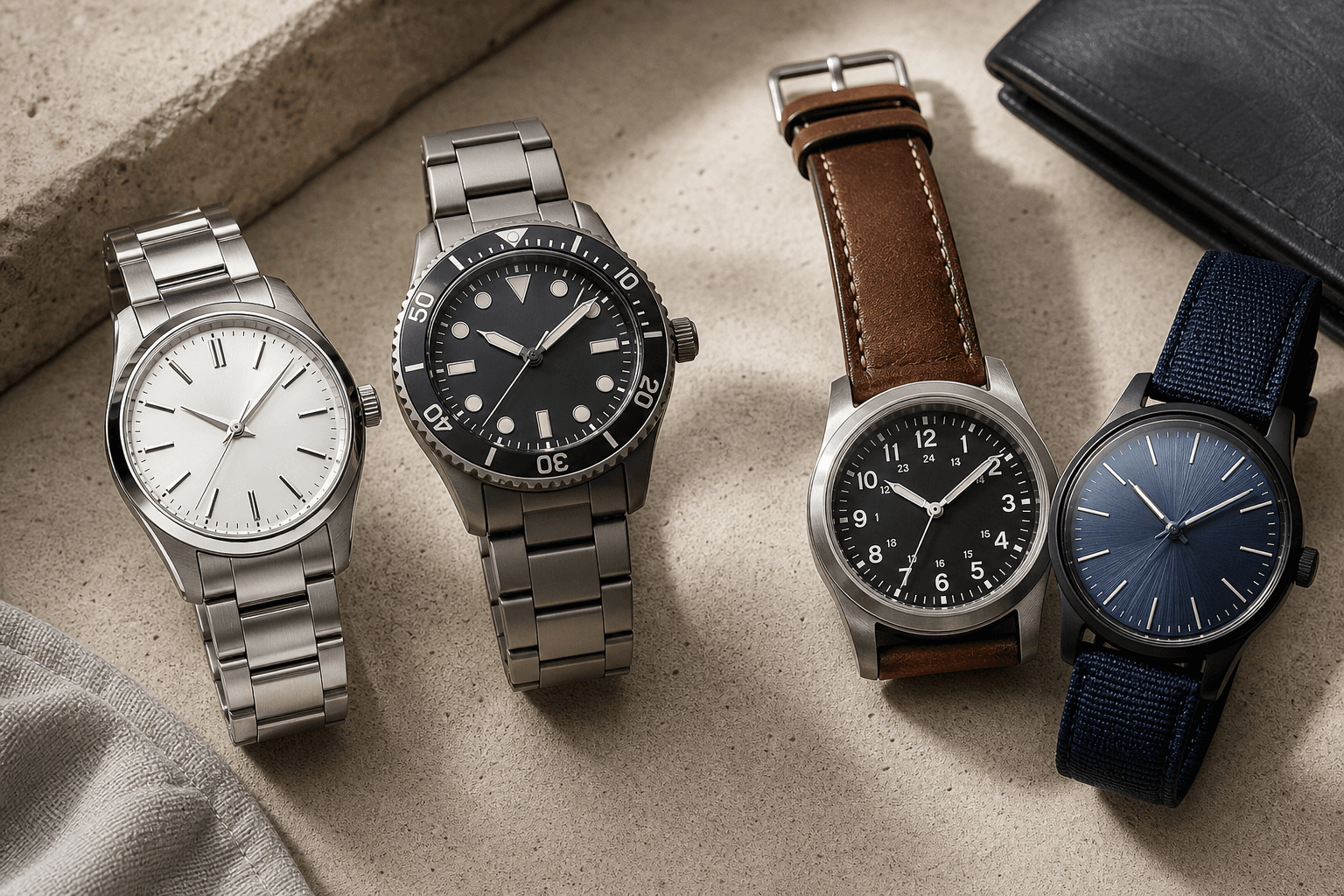
Why a watch still matters
In the apparel-fashion category, a wristwatch occupies a unique place: it is both a daily tool and a statement of personal style. Whether you favor tailored clothing, athleisure, or a rotation of casual looks, the right watch can quietly pull an outfit together while providing practical functionality you actually use. The challenge, of course, is that the modern watch market is crowded. There are dress watches with slim profiles, sport watches with rotating bezels and bold lume, field watches designed for legibility, and digital or hybrid models that emphasize utility. Add in questions about movement types, case materials, strap options, water resistance, and servicing, and it is easy to feel overwhelmed. This guide breaks down core considerations so you can filter choices efficiently and buy with confidence. Start by clarifying your primary use case: Do you want a single, versatile piece that moves from work to weekend, or distinct watches for office wear, workouts, and travel? Next, consider your environment and habits: If you spend time near water, higher water resistance and a screw-down crown might matter; if you value a sleek cuff fit with shirts, case thickness and curvature rise in importance. Budget also plays a role, not just for the watch itself but for future maintenance—quartz batteries are inexpensive to replace, while mechanical servicing is less frequent but more involved. Online shopping has made comparisons easier, with detailed product pages and macro photos to evaluate finishing, dial texture, and case geometry. Retailers like timepiecesusa.com curate ranges by style and price, which helps you narrow to a few promising options quickly. Still, understanding spec sheets remains essential: learn how to read diameter, lug-to-lug, and thickness together; note crystal type and coating; and check bracelet adjustment and strap compatibility. As you navigate, aim for alignment among three pillars: fit, function, and feel. Fit covers comfort and proportions on your wrist. Function centers on movement type and features you will use daily. Feel is the intangible, from dial color and indices to case lines that match your style. With these in balance, your watch won’t simply tell time—it will earn a steady place in your wardrobe.
Key specs and smart trade-offs
Movement is foundational. Quartz uses a battery and quartz crystal to keep very accurate time with minimal maintenance, typically needing only a battery change every few years. Automatic mechanical watches use a rotor that winds from wrist motion; they offer craftsmanship and a smooth seconds hand, but may drift a few seconds per day and benefit from periodic servicing. Hand-wound mechanicals remove the rotor for a thinner profile and require regular winding. Solar and other light-powered quartz movements convert light into energy and store it, reducing battery replacements. There is no universally “best” choice—match the movement to how you wear and maintain your watch. Case materials influence comfort and longevity. Stainless steel (often 316L) balances durability, finish, and cost. Titanium is lighter and skin-friendly but can show wear differently. Ceramic resists scratches well, though it can be more brittle in sharp impacts. Coatings like PVD or ion plating provide color (black or gold-tone) and should be treated with care to preserve appearance. Water resistance ratings can be confusing: around 30 meters generally covers rain and hand washing; 50 meters suits light swimming; 100 meters is better for frequent swimming and snorkeling; and higher ratings with screw-down crowns serve water sports. Always follow the manufacturer’s guidance. Crystal types affect clarity and scratch resistance. Acrylic is warm and shatter-resistant but scratches easily; mineral glass is common and cost-effective; sapphire is the most scratch-resistant and often paired with anti-reflective coatings. Dial legibility matters too: high-contrast markers, adequate lume for low light, and well-proportioned hands make time checks effortless. Fit is about more than diameter. Lug-to-lug (the length from top to bottom lugs) strongly influences how the watch sits on your wrist; shorter lug-to-lug measurements wear more compactly. Thickness affects cuff compatibility, while case shape and curvature impact comfort. Bracelet and strap details round out the experience: solid end links, a clasp with micro-adjust, or a quick-release spring bar system make fine-tuning easier. Leather adds refinement, rubber and FKM excel for active wear and water, and nylon is breathable and versatile. As you compare specs and images, it helps to open two or three product pages side by side and, where available, use tools that let you see features like case-back views, lume shots, and clasp adjustments in detail.
How to choose with confidence
Start by defining your primary scenario: everyday office wear, weekend adventure, fitness, travel, or a special occasion. If you want a single do‑most watch, a clean three‑hander with date, 100 meters of water resistance, and a bracelet plus quick‑release strap can cover a lot of ground. If you split use cases, a dressy piece with a slim profile and a separate sport model for outdoor use may make more sense. Measure your wrist circumference and test a few size ranges: for many wrists, 36–40 mm diameters wear well, but lug‑to‑lug and case shape matter more than numbers alone. When in doubt, sketch a circle template or print a paper size guide to tape on your wrist and check proportions under different sleeves. Create a shortlist of three to five candidates and compare them by the criteria that matter to you: movement type and service considerations, water resistance, case and crystal materials, legibility, and comfort adjustments on the bracelet or strap. Factor in ownership costs realistically—quartz batteries every few years; mechanical service every several years depending on usage and manufacturer guidance. Review warranty terms, return windows, and shipping timelines. Reputable retailers such as timepiecesusa.com typically present this information clearly; if you want to verify details like strap compatibility or clasp micro‑adjust, check product Q&A or customer support to learn more before purchasing. Think about daily practicality. Ensure the dial is readable at a glance in natural and artificial light. If your routine includes water, choose appropriate resistance and rinse the watch with fresh water after saltwater exposure. For magnet‑heavy environments, consider movements with anti‑magnetic design or be prepared to demagnetize if accuracy drifts. Rotate leather straps to prolong life, and store your watch on a soft surface or in a simple travel case. Avoid extreme heat or sudden shocks. If you travel often, a GMT function or an easy quick‑set hour hand can reduce friction; if you time workouts or cooking, a chronograph or timing bezel is useful. Above all, prioritize what you will use daily and what feels cohesive with your wardrobe—the watch you enjoy wearing is the watch you will reach for.
Bringing it all together
Selecting a watch becomes straightforward when you anchor the decision to fit, function, and feel. Fit covers dimensions that matter on your wrist—diameter, lug‑to‑lug, thickness, and weight—plus the finer points of bracelet adjustment and strap comfort. Function aligns movement type and features with the way you live, whether that means quartz simplicity, mechanical character, or light‑powered convenience, alongside water resistance, legibility, and any complications that truly add value. Feel rounds out the choice by reflecting your style, from dial color and texture to case shape and finishing. By narrowing your use case, setting a realistic budget that includes maintenance and strap options, and comparing a concise shortlist head‑to‑head, you can move from browsing to a confident purchase without second‑guessing. Retailers like timepiecesusa.com can help you visualize choices across styles and price points, and clear spec sheets make trade‑offs transparent. If you take a moment to measure your wrist, review warranty and return policies, and consider long‑term care, you will likely land on a watch that fits your daily rhythm as well as your personal taste. With a thoughtful approach, your next timepiece can serve as both a reliable tool and a subtle finishing touch to your wardrobe.