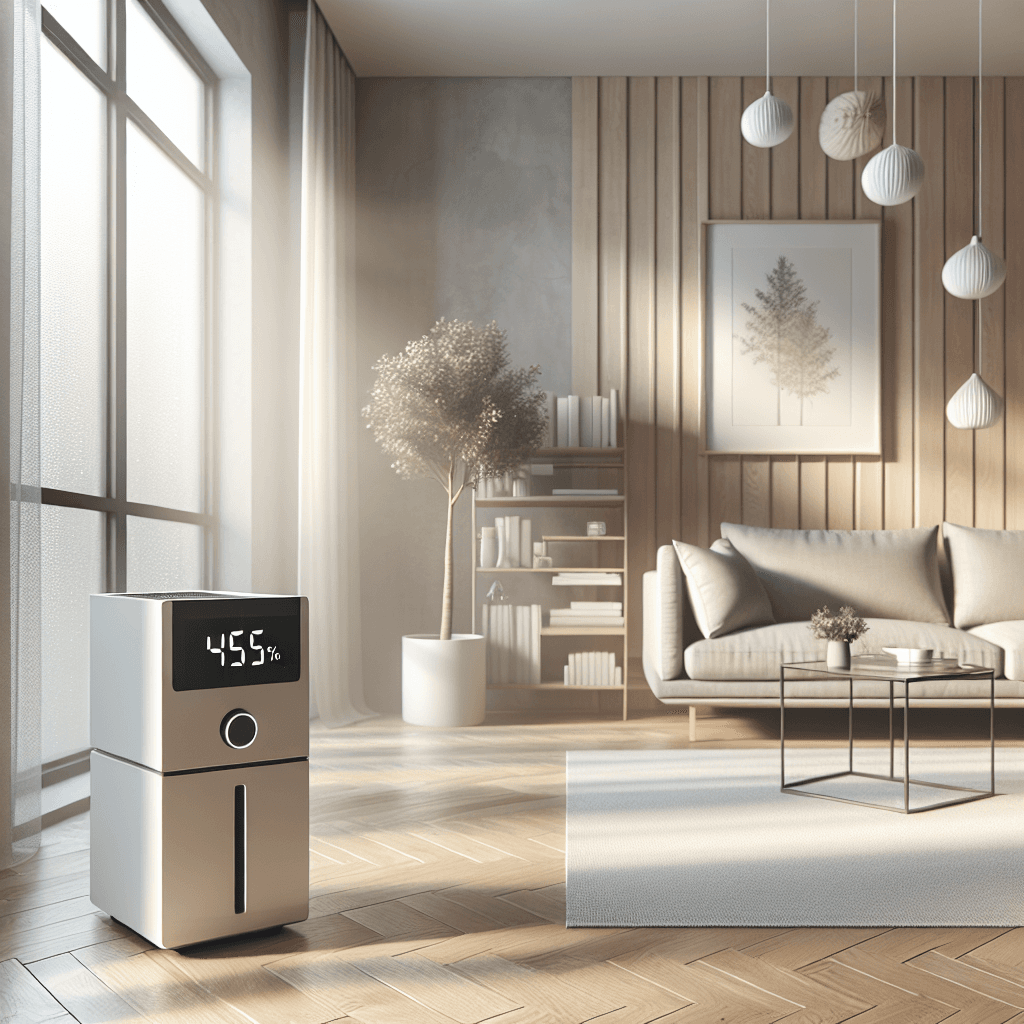
Why home humidity matters
Across much of Europe, changing seasons, well‑insulated buildings, and indoor drying habits can push relative humidity above comfortable levels. The result is familiar: condensation on windows, musty wardrobes, longer laundry drying times, and rooms that feel clammy despite normal temperatures. In the electronics and appliances category, a well‑chosen dehumidifier tackles these everyday annoyances by helping you maintain a stable, comfortable indoor environment. Rather than altering temperature like a heater or air conditioner, a dehumidifier simply removes excess moisture from the air, which can make living spaces feel fresher and help protect furnishings from prolonged damp conditions. For many households—particularly apartments with limited ventilation, basements, or north‑facing rooms—this is a practical, targeted solution. Understanding where humidity comes from is the first step. Showers, cooking, and indoor laundry can easily add liters of water vapor to your air each day. In colder months, warm indoor air meets cool window panes or exterior walls and leaves tell‑tale droplets. Even in mild climates, poorly ventilated rooms or older properties can hold on to moisture. While simple measures like using extractor fans and cracking a window help, they are not always enough in winter or in tightly sealed, energy‑efficient buildings. This is where a portable dehumidifier fits: it runs when and where you need it, often with a built‑in humidistat that keeps a set target, such as 50% relative humidity. Brands operating across Europe, including eu.meaco.com, offer models with different extraction capacities, energy demands, and noise levels so you can match the appliance to your space and lifestyle. If you are exploring options for apartments, family homes, or outbuildings, browsing ranges from reputable specialists can give a sense of the trade‑offs between size, power, and running costs. For a clear view of current line‑ups, pricing, and typical use cases, many shoppers start with the product overviews on eu.meaco.com, then narrow down to models that fit their room sizes and seasonal needs. Crucially, choosing a dehumidifier is not one‑size‑fits‑all. A small bedroom has different requirements from a damp cellar, and an open‑plan living area needs a different air flow strategy than a compact hallway. The rest of this guide outlines how to pick the right type and capacity, what features matter in daily use, and how to place and maintain the unit for the best balance of comfort and efficiency.
Key features and choices
Start with capacity. Manufacturers typically list a dehumidifier’s maximum extraction in liters per day (L/day), tested under warm, humid lab conditions. Real‑world performance varies with temperature and relative humidity, but capacity still offers a helpful guide. As a rough orientation: for a small flat or a single problem room, models around 10–12 L/day can be sufficient; for medium homes or multiple rooms, consider 16–20 L/day; and for larger homes, very damp spaces, or frequent indoor laundry drying, 20–30+ L/day may be appropriate. Always check the recommended room size or floor area, and remember that cooler rooms reduce the effectiveness of compressor‑type units. Compressor vs desiccant is the next decision. Compressor (refrigerant) dehumidifiers are generally most efficient in warmer environments—living rooms or heated homes above roughly 15°C. They often use less power at these temperatures and are popular for everyday domestic use. Desiccant units, by contrast, maintain steadier performance in cooler spaces—unheated basements, garages, or spare rooms that drop below 15°C—because their moisture‑adsorbing rotor is less affected by ambient temperature. They can also provide a small, gentle warmth as a by‑product, which some users find welcome in chilly areas. If your home spans both scenarios, hybrid line‑ups or a carefully chosen capacity can bridge the gap. To compare these differences and see which feature set aligns with your rooms, you can see features across current models. Noise and energy use matter too. Bedroom‑friendly units often specify low fan settings near 35–40 dB(A), while higher extraction and laundry modes will be louder. Look for a clear decibel range rather than a single figure. On efficiency, pay attention to wattage at different fan speeds, as well as smart controls: a humidistat that maintains 45–55% RH will prevent over‑drying and unnecessary runtime. Some models add timers, eco modes, auto‑stop with tank‑full sensors, and variable fan speeds that let you tailor performance to the moment. Practicalities can make daily use smoother. A removable water tank should be easy to lift and pour, with a viewing window for quick checks. If you run a dehumidifier for long hours or in a high‑moisture area, a continuous drainage option via hose can save time. Filters vary from basic washable dust screens to optional fine filters; they help keep the unit clean and can tidy up everyday dust, though they are not substitutes for dedicated air purifiers. For laundry, a dedicated mode holds a higher fan speed and continuous operation to pull moisture from clothes faster in a closed room. Finally, consider mobility (carry handles, castors), child locks, and, if you prefer app control, Wi‑Fi connectivity for scheduling and status at a glance.
Practical setup and usage tips
Before buying, measure your key space and note its typical temperature. Identify moisture sources—daily showers, cooking routines, and how often you dry clothes indoors. Set a realistic target of around 45–55% relative humidity for general comfort. If a single dehumidifier must serve multiple rooms, plan how doors and airflow will be managed; open internal doors can help one unit treat a suite of rooms, while closed doors focus performance in a problem area. In living areas, place the unit where air can circulate freely—roughly 15–30 cm from walls or large furniture—and avoid tight corners that choke airflow. Near a frequent moisture source (bathroom door, kitchen threshold, laundry rack) is often effective. Keep windows and external doors closed while the dehumidifier runs so you are not constantly drying outdoor air. Maintenance is straightforward but essential for stable performance. Empty and rinse the water tank regularly, and clean any washable filters as directed—often every few weeks in peak season. Wipe the intake and exhaust grilles with a soft, dry cloth to clear lint and dust. If you use continuous drainage, ensure the hose has a gentle fall with no kinks. For desiccant models, expect warm exhaust air; in tight spaces, angle the unit so this airflow supports room circulation rather than pointing directly at delicate surfaces. For compressor units in cooler months, check that the space remains within the recommended operating temperature to avoid excessive defrost cycles. To manage noise overnight, switch to a low fan setting or sleep mode and position the unit outside the immediate sleeping area while keeping the door ajar to encourage airflow. For laundry, cluster the drying rack and the dehumidifier in one room, then close the door for best results. Timers or app controls can align runtime with your routine—such as running the unit during the evening when moisture peaks after showers and cooking. Warranty, spare parts availability, and EU‑based support are also worth checking so the appliance remains serviceable for years. For a consolidated overview of models, user guides, and region‑specific availability, you can learn more before you commit. Finally, review your results after the first week. If the tank still fills quickly or windows gather condensation, try nudging the target humidity a little lower or adjusting placement to improve airflow. Conversely, if the air feels too dry or the unit rarely cycles off, raise the target to around 50% and confirm doors and windows are closed during operation. Small tweaks based on season, room use, and occupancy patterns will help you strike a comfortable balance while keeping energy use in check.
Summary and next steps
Choosing a dehumidifier for a European home comes down to matching capacity, technology, and features to your rooms and routines. Use extraction ratings and recommended floor areas to shortlist candidates, then weigh compressor units for warmer spaces against desiccant models for cooler rooms. Check decibel levels, humidistat control, and power draw at different fan speeds to align comfort with efficiency. Practical details—tank size, continuous drainage, washable filters, laundry modes, and mobility—will shape how easy the unit is to live with day to day. For setup, place the dehumidifier where air can circulate, keep windows closed while operating, and target about 45–55% RH. Clean filters and rinse the tank regularly, and consider app scheduling or timers to match your moisture peaks. After a short trial period, fine‑tune your target and placement for steadier results. Brands like eu.meaco.com offer a range of capacities and features suited to apartments, family homes, and cooler outbuildings, making it easier to find a practical fit. With a measured approach, you can manage everyday moisture, improve indoor comfort, and run the appliance efficiently across the seasons.