Why mirrorless now
Mirrorless cameras have matured into versatile tools that balance image quality, speed, portability, and video capabilities for nearly every type of creator. Whether you are a traveler hoping to lighten your bag without giving up professional results, a parent documenting everyday moments, a content creator producing short-form clips across social platforms, or a photographer growing into paid assignments, today’s mirrorless bodies and lenses can meet those needs with fewer trade-offs than in years past. In the electronics and appliances category, this convergence of stills and video in a single system is especially meaningful: it turns a single purchase into a multipurpose kit that can handle portraits, landscapes, product photos, livestreams, and 4K footage with strong color and detail. The challenge, of course, is choice. Sensor sizes, autofocus marketing terms, 4K frame rates, bit depth, body stabilization, codecs, and lens ecosystems can blur together quickly. If you are new to the segment, it can be hard to know whether to prioritize resolution or sensitivity, speed or battery life, compact zooms or bright primes. Even experienced shooters may wonder if they should upgrade for 10‑bit color, a more robust codec, or a higher refresh-rate viewfinder. That is where a structured approach helps. First, define your most common scenarios—low-light family events, daylight travel, indoor interviews, fast action outdoors, or a mix. Then, set a realistic budget that includes at least one versatile lens, ample storage, spare batteries, audio, and basic support like a small tripod. Finally, compare a short list of bodies across the handful of specs that matter most to your work rather than trying to tick every box. Retailers like bhphotovideo.com curate a broad selection and detailed product information, making it easier to cross-reference key features and assemble a coherent kit. By pairing a clear use case with focused spec checks, you can choose a camera that feels responsive in hand, delivers reliable results, and offers room to grow as your skills and projects evolve.
Core specs that matter
Start with sensor size because it influences depth of field, low-light performance, lens selection, and body size. Full-frame sensors generally provide stronger high-ISO performance and shallower depth of field for subject separation, which can be useful for portraits, events, and cinematic video. APS‑C offers excellent image quality in smaller bodies with more compact lenses—a strong fit for travel, street, and everyday use. Micro Four Thirds emphasizes portability and extended reach for telephoto work, and modern sensors paired with effective stabilization can still deliver impressive results in both stills and video. Resolution is next. For most users, 20–26 megapixels is a versatile sweet spot: it comfortably supports large prints, detailed crops, and high-quality web delivery without ballooning file sizes. Higher‑resolution bodies (e.g., 40–60MP class) are great for studio, landscape, and product work but demand sharper technique, more storage, and sometimes slower burst performance. If you shoot action, prioritize autofocus reliability and buffer depth over raw megapixels. Look for on‑sensor phase detection with subject detection modes for people, animals, vehicles, and improved eye tracking. A deeper buffer and sustained burst rates keep sequences consistent—important for sports and wildlife when moments unfold quickly. In‑body image stabilization (IBIS) benefits both handheld stills and video by letting you use slower shutter speeds or smoother footage without additional rigs. For video, check 4K quality (oversampled vs. line‑skipped), available frame rates, recording time limits, heat management, and whether the camera offers 10‑bit internal recording with log or flat profiles. If you color grade or mix footage from multiple sources, 10‑bit and log profiles give more flexibility. Also review codec efficiency and bitrates to balance quality with storage needs. Creators who record long interviews or streams should confirm clean HDMI output, reliable USB‑C power delivery, and headphone/mic jacks for monitoring. Beyond the body, the system matters. Consider lens availability, size, and cost within the mount you are choosing. A standard zoom (around 24–70mm full‑frame equivalent) plus a fast prime (35mm or 50mm) is a strong foundation. Telephoto zooms serve sports and wildlife, while ultra‑wides cover interiors and landscapes. Don’t overlook practicalities such as weather sealing, viewfinder refresh rate, touchscreen responsiveness, memory card formats (UHS‑II SD vs. CFexpress), and battery life. A quick comparison page can help you see features side by side, narrowing choices to the models that best align with your priorities and budget.
How to choose smart
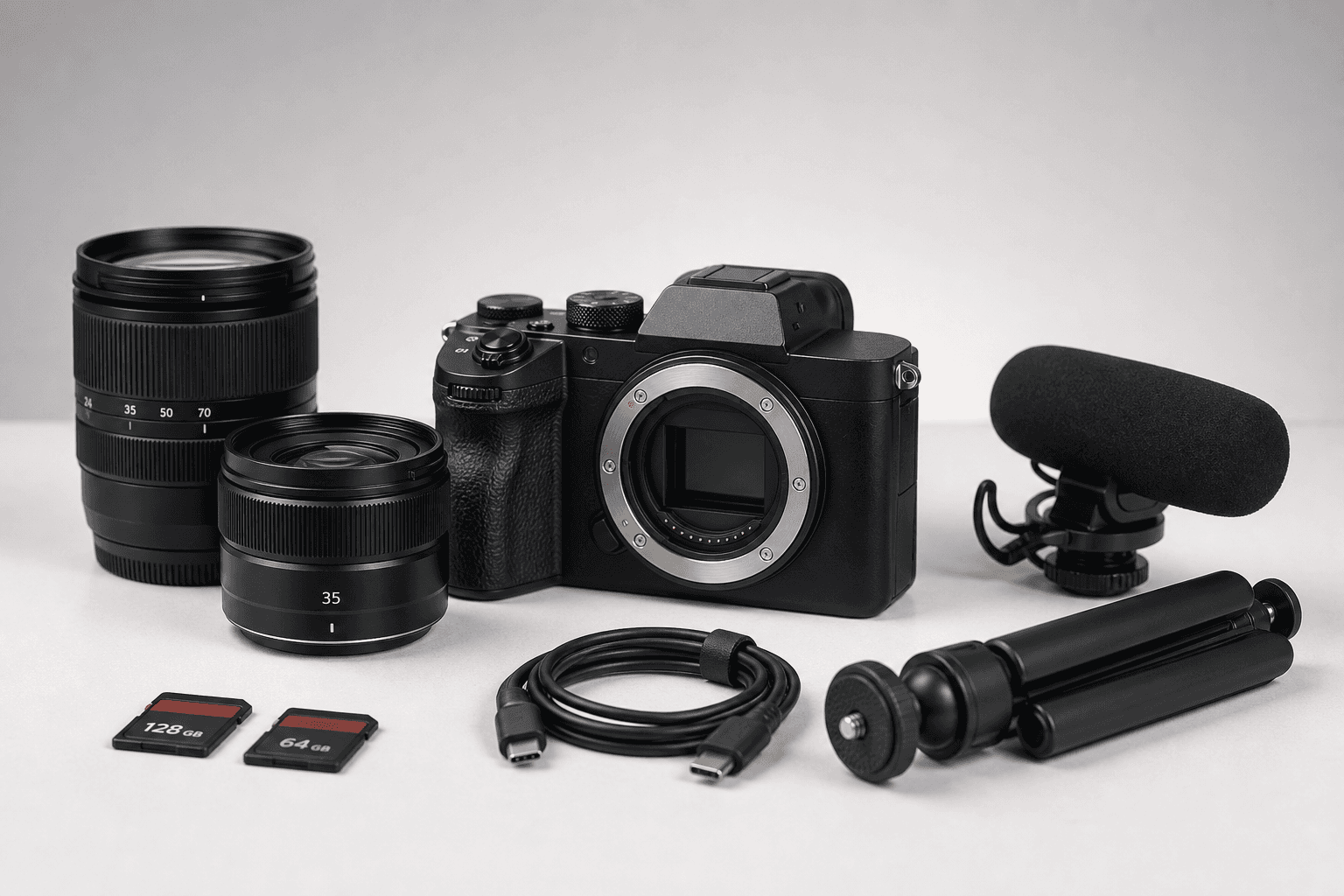
Begin by writing down your top three use cases and ranking them. For example, you might prioritize hybrid travel (photos and video), family moments in low light, and occasional interviews. With that list, assign your must‑haves: reliable eye‑AF, 4K30 or 4K60 depending on slow‑motion needs, strong IBIS for handheld work, and a standard zoom that starts at a true wide angle for interiors. If your focus is action, switch the emphasis: deep buffer, fast burst rate, robust tracking, and a telephoto zoom that reaches your typical subject distance. Budget planning should include the entire kit, not just the body. Allocate for at least one extra battery, high‑speed cards matched to your camera’s slot (UHS‑II V60 or V90 SD, or CFexpress where supported), a compact on‑camera mic for cleaner audio than built‑in mics, and a small travel tripod or monopod for stability. If you shoot video interviews, a lavalier or dual‑transmitter wireless kit and closed‑back headphones are worthwhile. For photo‑centric kits, a fast prime supplements the kit zoom to handle portraits and low light without pushing ISO too high. Don’t forget basic protection: a padded bag, a UV or clear protective filter if appropriate, and a blower for sensor and lens maintenance. Workflow readiness is equally important. Ensure your computer and storage can handle 10‑bit or high‑bitrate footage if you plan to grade; if not, 8‑bit in a high‑quality 4:2:0 codec may be sufficient for quick edits. Keep a pair of external SSDs for active projects and backups, and enable in‑camera dual‑card recording for critical events when available. Before committing, try to handle the camera in person or rent a candidate for a day to see how it fits your hands, how intuitive the menus feel, and whether the EVF and screen meet your expectations. A comfortable grip, clear menus, and responsive AF matter as much as spec sheets when you are working quickly. When you are ready to purchase, compare bundles that include a standard zoom or creator kit, as these can offer good value. Check return windows and consider extended coverage for accidental damage if you regularly work on location. Established retailers like bhphotovideo.com provide extensive product pages, customer Q&A, and accessories matched to each camera, and you can confirm compatibility before checkout via the official site. Take your time finalizing the lens roadmap: start with a versatile zoom and one prime, then add specialty lenses only after you have tested real-world gaps in your kit.
Key takeaways and next steps
Choosing a mirrorless camera in 2026 comes down to aligning your most common shooting scenarios with a short list of meaningful specs. Sensor size, autofocus reliability, stabilization, and video capabilities set the foundation; ergonomics, battery life, and storage formats determine how the camera feels day to day; and lens availability shapes how far you can grow within a system. Aim for a balanced kit: a versatile standard zoom for everyday coverage and a fast prime for low light or subject separation. If you are video‑forward, confirm 10‑bit, log options, heat management, audio I/O, and stable power. For action, emphasize buffer depth, tracking performance, and telephoto reach. Whatever your mix, remember that technique, workflow, and maintenance multiply the value of any camera body. As you narrow choices, review a few real‑world files, handle a body if possible, and build a holistic budget that includes media, power, audio, and basic support gear. With a focused checklist and a clear sense of priorities, you can select a camera that serves current projects and leaves headroom for future ambitions—without overspending on features you will not use right away. When your shortlist is ready, compare final specs, lens roadmaps, and kit bundles from trusted retailers. A thoughtful, system‑based decision today will help you create confidently for years to come.