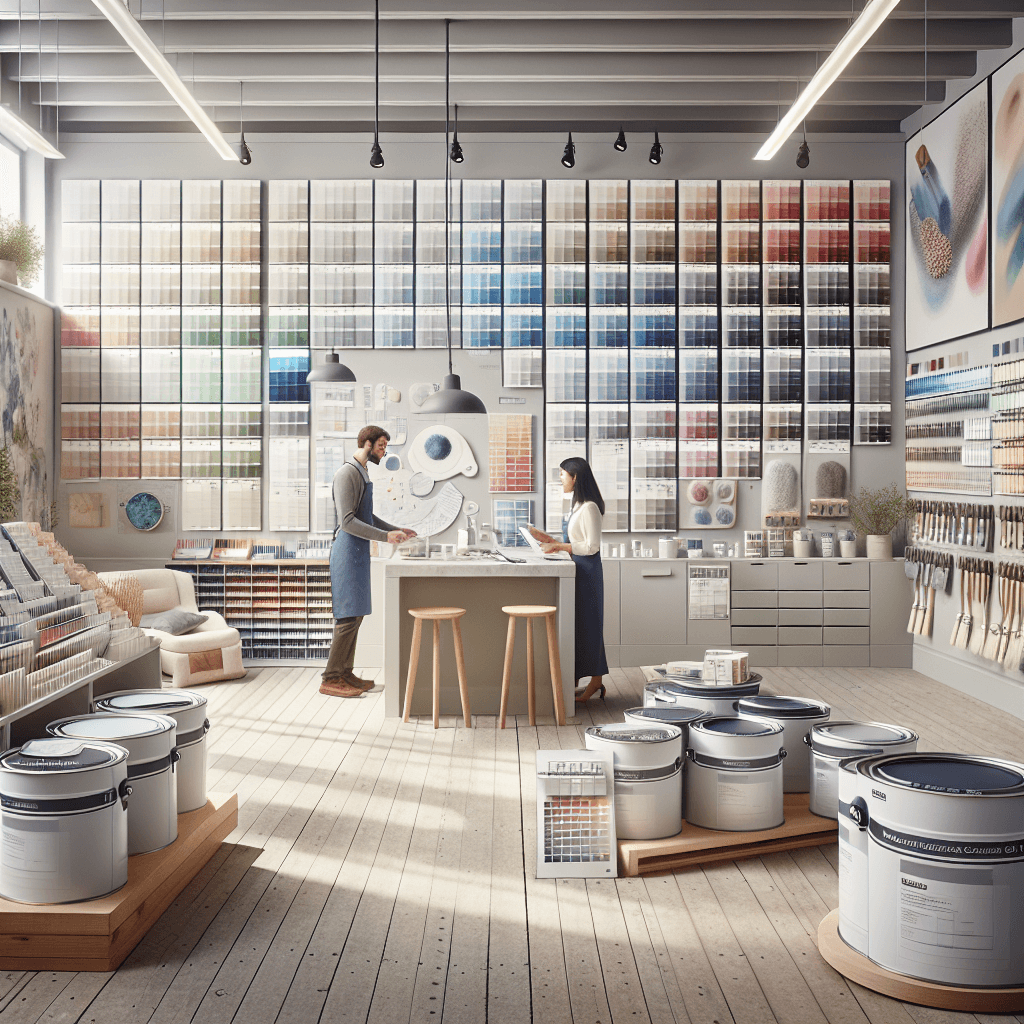
Why paint choice matters
A fresh coat of paint remains one of the most cost-effective and transformative updates in the home and garden category, whether you are refreshing a living room, brightening a rental property between tenancies, or protecting exterior woodwork from the elements. Yet the ease of rolling on colour hides a deceptively complex set of decisions that influence how the finish looks on day one and how it performs years later. Selecting the wrong formulation can mean scuffs that won’t wipe clean, blistering on exterior walls when the weather turns, or a mismatch in sheen that highlights every patch and repair. Add to this the pressure of coordinating colours across open-plan spaces, keeping moisture-prone rooms like kitchens and bathrooms fresh, or meeting durability expectations in family homes and high-traffic hallways, and it’s clear why careful planning pays off. This guide brings together practical considerations to help you navigate paint types, finishes, surface preparation, tools, and quantities with confidence. While premium trade ranges are designed to deliver reliable coverage, flow, and durability, success also depends on pairing the right product with the right surface, following sensible preparation, and applying with the correct tools. That’s as true for a DIY weekend project as it is for a professional decorator managing multiple rooms to a deadline. Drawing on approaches widely used by pros and supported by the product depth available through duluxdecoratorcentre.co.uk, you’ll see how a few strategic choices up front can simplify the whole process and improve your results. Colour selection is another area where a considered process pays dividends. Lighting varies widely between store displays, mobile screens, and real rooms; daylight shifts throughout the day; and adjacent materials, from flooring to countertops and soft furnishings, all influence how hues are perceived. Small, low-commitment trials in situ—on the actual wall or on sample boards—are the safest way to preview undertones and sheen before investing in full tins. For exteriors, it’s wise to check colours at multiple times of day and in different weather conditions, because natural light can significantly alter warmth and depth. As you plan, think of paint not just as colour but as a protective system: compatible primers, undercoats, and topcoats work together to seal, adhere, and endure. With that mindset, and with access to specialist ranges and knowledgeable advice through duluxdecoratorcentre.co.uk, you’ll be in a strong position to achieve a consistent, durable finish across interiors and exteriors.
Key finishes and materials
Start with the surface and the stresses it will face. Interior walls and ceilings, particularly in living areas and bedrooms, usually call for a smooth, low-sheen look that minimises surface imperfections. A matt or flat matt emulsion delivers that gentle, contemporary appearance, while a durable matt adds improved washability for busy households. In bathrooms and kitchens where steam, condensation, and frequent cleaning are expected, moisture-resistant paints formulated to resist mould growth and withstand wipe-downs provide more reliable performance. For feature walls, accent colours in richer finishes can be striking, but it’s still wise to choose a formulation that balances depth of colour with ease of maintenance. On trim, doors, and skirting, sheen level shapes the character of a room. Satinwood sits in the middle, offering a soft, modern glow and good mark resistance; eggshell is subtler and works well in period properties; gloss gives a crisp, reflective finish that reads as classic and highly durable. Water-based trim paints have improved substantially, offering faster drying times, quicker recoat windows, and lower odour, which makes them practical for family homes. Solvent-based systems can still be helpful in certain demanding situations, but many decorators prefer modern water-based options for speed and ease of use, especially where time on site matters. Exteriors introduce additional variables. Masonry paints need to resist rain and UV while allowing walls to breathe. For coastal or highly exposed locations, a formulation emphasising durability and weather resistance can maintain colour and finish longer. Exterior wood requires systems that flex with seasonal movement, supported by suitable primers and undercoats to lock down tannins and provide a stable base. On metalwork, rust-inhibiting primers combined with compatible topcoats help prevent corrosion. For floors—garages, workshops, or utility spaces—specialist floor paints enhance abrasion resistance and ease of cleaning. Wherever stains or water marks are present, stain-blocking primers prevent discolouration from bleeding through the finish, while general-purpose primers ensure adhesion on tricky substrates. Surface preparation underpins every good result. Cleaning to remove grease and dust, repairing cracks and holes with appropriate fillers, caulking gaps neatly, and sanding to key glossy areas help finishes adhere and level. Where new plaster is involved, a suitable sealer or a carefully prepared first coat allows subsequent coats to bond properly. Coverage rates vary by product, but many interior emulsions provide roughly 10 to 15 square metres per litre per coat on smooth, previously painted surfaces; textured or porous substrates reduce that yield. Always consult the specific tin or product data for accurate guidance, and plan for at least two coats for an even, confident finish. Before committing, colour testers or peel-and-stick samples applied in the actual space give you the best preview under real lighting. If you are building a basket or checking current availability, it’s easy to explore offers while you shortlist finishes, tools, and preparation materials that match your scope.
Planning and buying steps
Turn ideas into a workable plan by defining the spaces, surfaces, and conditions involved. Note whether you’re covering old colours with lighter shades, dealing with nicotine or water stains, or painting high-traffic corridors that see frequent bumps and scuffs. Estimate quantities methodically by measuring wall lengths and heights, subtracting significant openings, and dividing by the expected coverage per litre per coat listed on the tin, then factoring for two coats and a small contingency for touch-ups. Record sheen levels and product names so that later maintenance is straightforward. For open-plan rooms, consider how light travels; adjacent zones painted in different sheens can read inconsistently, so coordinating finishes across connected walls helps maintain visual flow. Alongside paint choice, match tools to substrates and techniques. Short-pile rollers are ideal for smooth walls and ceilings; medium-pile covers suit light texture; long-pile rollers help on rough masonry. Good-quality angled brushes cut crisp lines around trim and ceiling edges, improving speed and reducing masking tape reliance. Extension poles reduce ladder moves on ceilings, improving safety and consistency. If time is tight or you’re handling large areas, a well-specified sprayer can increase productivity, but it demands thorough masking and ventilation. Between coats, protect rollers and brushes from drying by wrapping them airtight, and plan your sequence so ceilings and walls are completed before trim, reducing the risk of accidental marks on freshly finished woodwork. Timing and conditions influence results. Interior jobs benefit from stable temperatures and good airflow to aid curing; exterior projects require dry, mild weather and surfaces free from frost or direct rain. Checking the forecast and allowing appropriate drying windows between coats helps prevent defects like blistering or poor adhesion. Safety is straightforward: ventilate well, wear appropriate protection when sanding or cutting, and follow product guidance on storage and disposal. For sustainability, low-VOC, water-based systems reduce odour and simplify cleanup, and careful measuring helps avoid excess leftovers. If you do end up with spare paint, store it sealed and labelled for future touch-ups, or look into local reuse schemes. When it’s time to purchase, streamline your basket with compatible systems—primer, undercoat where recommended, and topcoat—plus fillers, caulk, abrasives, dust sheets, and a small supply of spares like extra roller sleeves. Dulux Decorator Centre’s ranges and services are geared to support both trade and keen DIYers, from tinting and colour matching to convenient delivery and collection options. If you want help translating a mood board into a durable, maintainable scheme, the store teams and online resources make it easier to move from idea to finish. For product availability, local stock, and professional guidance, head to the official site, where you can refine choices, confirm coverage data, and finalise a plan that fits your budget and timetable.
Summary and next steps
A successful paint project balances colour, finish, preparation, and application so that the final result looks consistent and stands up to daily life. Starting with the surface in front of you—interior walls, moisture-prone bathrooms, exterior masonry, wood, or metal—guides you toward the right system of primer and topcoat. Choosing sheen with intent shapes the mood of a room, while modern water-based options often simplify drying and cleanup. Careful measurement and realistic coverage estimates reduce waste, and trying colours in situ under real lighting removes much of the guesswork that leads to rework. Good tools raise the quality bar. The right roller nap, a reliable cutting-in brush, and stable extension poles all help deliver straighter lines, smoother walls, and more even ceilings. Sensible sequencing, consideration for weather and ventilation, and a plan for safe handling, storage, and disposal round out a professional approach. Whether you’re a first-time DIYer or a seasoned tradesperson, duluxdecoratorcentre.co.uk offers depth in paints, primers, and accessories, alongside tinting and advice that make specifying simpler. With the fundamentals set—surface, system, tools, and time—you can proceed confidently, knowing that each step supports the next and that your finish will look the way you imagined on day one and remain practical and maintainable over time.